
Locally Grown: Local Farms
JohnAnge KernodleFood & Drink
4.9223.00 Reviews
- Version
- 1.1.1
- Installs
- 10.00K
- Age Rating
- Everyone
Screenshots
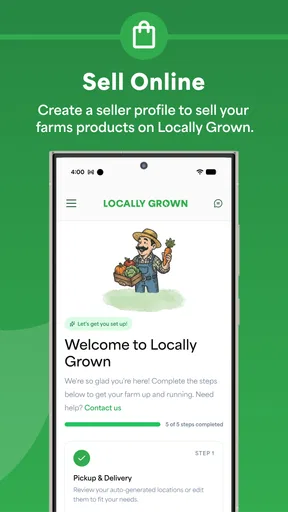
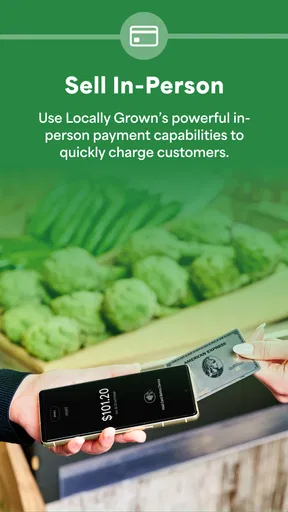
Our Review of Locally Grown: Local Farms
 Analysis by Appyee
I like food apps that solve a specific local problem rather than trying to become a supermarket, recipe book, loyalty card, and delivery service all at once. Locally Grown: Local Farms takes a clearer route: it helps people find food from nearby farms and arrange pickup or delivery. That focus makes it interesting for shoppers who want a more direct connection with local producers, but it also means the experience depends heavily on what farms are available in your area.
I spent time looking at the app as a practical shopping tool, not just as a directory. The important question is not whether buying locally sounds appealing; it is whether the app makes the weekly food run easier than visiting several farm websites, checking social media posts, or driving around to different stands. My overall impression is positive, especially for flexible shoppers who enjoy seasonal food. Still, it is not a universal replacement for a grocery delivery app.
How Locally Grown fits into everyday food shopping
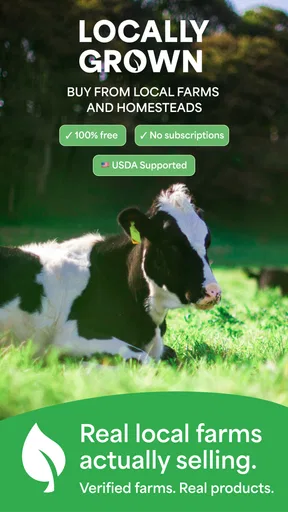
Locally Grown: Local Farms is a free Food & Drink app from developer JohnAnge Kernodle. Its central purpose is straightforward: connect shoppers with local farms for food orders that can be collected or delivered. The app is available to everyone, and its broad appeal comes from removing some of the guesswork involved in finding nearby farm products.
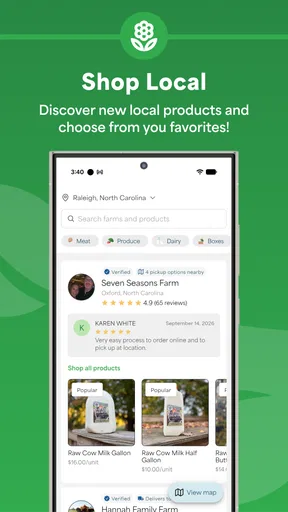
The best way to think about it is as a local-food marketplace rather than a standard supermarket catalog. A supermarket app usually starts with a large, predictable inventory and lets you search by brand, aisle, or household staple. This app is more likely to make you think about source, season, and availability. That difference is important. If I need a specific brand of pasta tonight, a conventional grocery app is probably faster. If I want to discover what nearby farms are offering and build a meal around it, this is the more natural option.
The app has attracted an average rating of 4.9 from around 2.7 thousand ratings, with over 10 thousand installs. Those figures suggest that its focused audience responds well to the idea and the way the service works. They do not guarantee that every local market will feel equally active, though. A local marketplace can be excellent in one area and much thinner in another, so I would judge it primarily by the farms and products that appear after setting up my location.
Because it is free, there is little risk in trying it. The more meaningful cost is time: browsing local listings, comparing pickup and delivery choices, and adjusting expectations when seasonal stock changes. For me, that trade-off is worthwhile when I plan ahead, but less attractive when I need a rushed, highly predictable order.
The first-use experience and the right mindset
A useful first step is to treat the app as a planning tool. Instead of opening it only when I am already hungry, I would check it before deciding on the week’s meals. That gives local listings a chance to influence the menu rather than forcing the app to imitate an on-demand grocery service.
This approach also helps with one of the less obvious realities of farm shopping: availability is part of the experience. A local producer may have excellent products without carrying the same range every day. I would keep two or three flexible meal ideas in mind, then choose based on what is currently offered. That small change prevents disappointment and makes the app feel more useful.
Another practical habit is to separate “planned staples” from “discovery items.” I might use a normal supermarket for items that must be available every week, while using Locally Grown for vegetables, eggs, baked goods, meat, or other locally sourced products that can shape the rest of the meal. This mixed approach is more realistic than expecting one app to handle every part of household shopping.
Pickup and delivery are different kinds of convenience
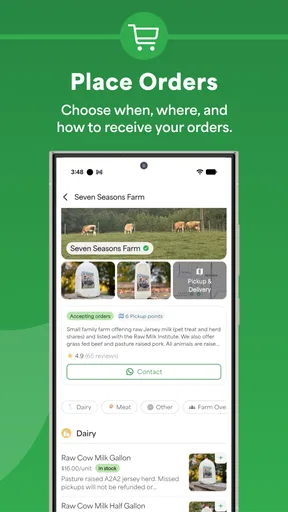
The choice between pickup and delivery is not merely a preference button. Pickup can make sense when I am already near a participating farm or collection point, especially if I want to avoid waiting for a delivery window. Delivery is more useful when several local orders would otherwise require separate trips. The better option depends on distance, schedule, and how much coordination the local sellers require.
I would read each order’s arrangements carefully before committing. Local food services can involve different collection times, preparation schedules, or delivery expectations from one seller to another. The app’s value is bringing the opportunity together in one place, but the underlying farms still operate in their own ways. That is a strength for authenticity, though it can create more variation than a centralized retailer.
For a realistic weekday scenario, imagine finishing work and realizing that the refrigerator is nearly empty. A supermarket app may offer a broad same-day selection, while this one is better suited to an order planned around what local farms currently have. I might choose fresh produce for a simple dinner, arrange pickup for the next available window, and buy missing pantry items elsewhere. The app contributes the local part of the shop without pretending to solve every need.
What the current release tells me
The current version is 1.1.1, and the app was released on May 7, 2025. That places it in a relatively early stage compared with long-established food platforms. I see that as both encouraging and important: the core idea is already usable, while the product may still be refining how it handles the many small details of local commerce.
The version number is especially relevant for existing users. A move to a later maintenance release can indicate that the developer is actively shaping the early experience, but I would not assume that every inconvenience has disappeared simply because the version has changed. The sensible approach is to update when available, then pay attention to whether browsing, ordering, and fulfillment feel smoother in actual use.
What I appreciate about this stage is that the app has room to become more useful without losing its identity. The danger would be adding so many general shopping features that the local-farm focus becomes harder to see. For now, its strongest product decision is staying close to the connection between local producers and nearby shoppers.
Who benefits most from using it
This app suits people who are comfortable with seasonal choices and do not need identical inventory every time they shop. It is also a good fit for households that already care about where food comes from and want a more convenient way to look for nearby options. Someone who enjoys planning meals around fresh ingredients will probably get more from it than someone who only wants a fixed shopping list filled in the shortest possible time.
It can be particularly useful for a shopper who has recently moved to a new area. Rather than searching separately for every farm, market, or producer, the app offers a starting point for discovering what is available locally. I would still verify practical details inside each listing before ordering, but the discovery step is where the service can save real effort.
Families may also find value in using it for occasional additions rather than the entire grocery run. A child might enjoy choosing local fruit, or a household could use farm products for a weekend meal. This kind of limited, repeatable use is more sustainable than turning the first session into an attempt to replace a full supermarket trip.
On the other hand, I would skip it if my priority is guaranteed selection, instant fulfillment, or highly standardized delivery. People with strict dietary requirements should also be prepared to inspect products carefully and avoid assuming that every local listing will meet a particular need. The app can make local sourcing easier, but it cannot make every farm operate like a national retailer.
Three practical strategies that improve the experience
Use the app before meal planning, not after it. This is the most important adjustment I would recommend. Browse first, note the products that look available, and then choose meals around them. That workflow turns changing inventory into an advantage instead of a frustration.
Combine pickup with an existing journey. If a farm or collection point is near work, school, or a regular errand, pickup may feel much more efficient than arranging a separate trip. I would group the collection with something already on my route and avoid making a local order create an unnecessary drive.
Keep a backup for non-local essentials. A local order works best when I do not force it to cover every item. I would use the app for the products it handles well, then keep a short supermarket list for pantry goods or items that are not available locally. This reduces the temptation to abandon the order when one missing ingredient appears.
A fourth strategy is to compare the total effort, not just the product price. A nearby pickup may be excellent value if it replaces a longer shopping trip, while delivery may be worthwhile when it combines several local purchases. The free download does not mean every order is automatically the cheapest option; travel, delivery arrangements, and minimum purchasing expectations can affect the real convenience.
Where it compares well with familiar alternatives
Compared with a supermarket app, Locally Grown offers a more personal and place-based shopping experience. The benefit is discovery: I can look for nearby farm products rather than searching through a huge catalog dominated by packaged goods. The drawback is consistency. A supermarket usually wins when I need exact brands, broad stock, or a tightly timed order.
Compared with visiting individual farm websites, the app has the potential to reduce the amount of searching involved. One focused place is easier than remembering several separate sites and checking each one. The trade-off is that a marketplace view may not communicate every detail a producer would publish on its own channel. I would still read the information attached to each product and treat the app as a convenient starting point rather than the only source of context.
Compared with farmers’ markets, the app offers more flexibility around ordering and fulfillment. A market visit can be enjoyable, but it may require being there at a particular time and location. Pickup or delivery can fit better into a busy week. The market experience remains stronger for spontaneous browsing and face-to-face interaction, so the app is not a complete substitute for people who value that social side of local food.
Compared with general delivery platforms, this service has a narrower purpose. That narrowness is its advantage when I want local farms specifically, but a general platform may be better for speed, restaurant meals, or a large mixed basket. I would choose based on the job in front of me, not loyalty to one shopping method.
Friction that should influence your decision
The biggest limitation is the natural unevenness of local supply. The app can connect me to farms, but it cannot guarantee that the products I want will be available when I want them. This matters for people who shop with rigid recipes or who dislike substitutions. Flexibility is not an optional extra here; it is part of using the service successfully.
There is also a coordination trade-off. Pickup and delivery may involve arrangements that differ from ordinary centralized grocery orders. I would expect to spend more attention checking timing and fulfillment details, especially on a first order. That is not necessarily poor design; it reflects the fact that local producers are not all working from one warehouse. Still, shoppers who want a completely uniform process may find it tiring.
Another limitation is scale. With over 10 thousand installs, the app has a meaningful early audience, but it is not presented as a massive national shopping network. Its usefulness will depend on local participation. Before building a weekly routine around it, I would open the app, check the nearby options, and see whether the selection matches my household’s needs.
The app also asks for a different attitude toward convenience. It may save discovery time while requiring more planning time. That exchange is worthwhile for me when I care about local sourcing, but it would not be my first choice for an emergency dinner or a large standardized household order.
What existing users should expect from its evolution
Users who installed an earlier release should see version 1.1.1 as part of the app’s early refinement rather than as proof that the service has reached a final form. I would judge improvements through everyday tasks: finding relevant farms, understanding whether an item is suitable for pickup or delivery, completing an order without confusion, and returning later to repeat the process.
For new users, the same point is useful. A high average rating and a growing audience are encouraging signs, but local marketplaces are judged by the quality of the local experience. I would give the app a fair trial with a small order first. That lets me learn how nearby fulfillment works without making the entire week’s food depend on an unfamiliar service.
The most valuable future progress would be anything that makes local variety easier to manage without flattening it into a supermarket imitation. Clearer availability, smoother repeat shopping, and better ways to coordinate pickup or delivery would directly improve the practical experience. Those are sensible areas to watch, but I would treat them as expectations rather than existing promises.
Privacy, age suitability, and everyday accessibility
The app carries an Everyone content rating, which makes it suitable for a broad audience from a content perspective. In practical terms, younger users may still need an adult to handle ordering, payment decisions, pickup arrangements, or delivery instructions. The simple concept is easy to understand, but purchasing food remains a household responsibility.
It supports Android devices starting from version 7.0, so it is accessible to people using older Android hardware rather than requiring a recent phone. That is useful for a family device or an older handset dedicated to shopping. I would still keep the operating system updated where possible, because general device security and reliability matter when using any shopping service.
For accessibility in daily use, the most important factor is whether product and fulfillment information is easy for each shopper to read and interpret. I would take a little extra time with the first order, especially if several farms appear nearby, and save the workflow that proves easiest. Once I know which local options fit my schedule, repeat shopping should become less demanding.
What I would watch before making it a weekly habit
I would watch how consistently nearby farms maintain useful listings and how clearly pickup or delivery expectations are communicated. Those details matter more than adding decorative features. A local-food app succeeds when it reduces uncertainty without hiding the realities of seasonal supply.
I would also watch whether the service becomes more helpful for repeat customers while remaining welcoming to first-time shoppers. The ideal progression is simple: discover a farm, place a modest order, complete fulfillment smoothly, and return because the next visit feels easier. If future releases support that loop, the app could become a dependable part of a local shopping routine.
At the same time, I would not want the product to chase the biggest grocery apps on their own terms. More products and broader coverage could be useful, but excessive expansion might make local farms harder to find. The strongest future for this app is one that improves clarity and reliability while keeping the producer-to-shopper connection visible.
After weighing the current release, its early development stage, and the practical trade-offs, I think Locally Grown: Local Farms is worth trying for anyone curious about buying from nearby producers. Its free price makes experimentation easy, and its 4.9 average shows that many users already appreciate the focused idea. I would start with a small, flexible order and compare pickup and delivery based on my actual route and schedule.
I would recommend it to a friend who enjoys seasonal food, wants to discover local farms, or is tired of searching across scattered sources. I would not recommend relying on it alone for urgent meals, exact-brand shopping, or a perfectly predictable weekly basket. The app is at its best when it complements ordinary grocery shopping rather than trying to replace it. Used that way, it turns local food from an occasional search into a more manageable part of everyday planning.
Verdict
Strengths of Locally Grown: Local Farms
- Helps users discover nearby farms and locally produced food.
- Supports small farms and strengthens local food communities.
- Useful for finding seasonal produce and farm-fresh products.
- Can make shopping more personal by connecting buyers with growers.
- Encourages more sustainable, locally focused purchasing habits.
Limitations of Locally Grown: Local Farms
- Listings may be limited in rural areas or smaller communities.
- Farm details and availability can change quickly between visits.
- Some products may cost more than supermarket alternatives.
- Not every farm may offer delivery, pickup, or online ordering.
- The app’s usefulness depends on farms actively maintaining their listings.
Similar Picks in This Category
View All
Rappi: Food Delivery, Grocery
Rappi, Inc - Delivery3.5

McDonald’s: Cupons e Delivery
Arcos Dorados4.3

Swiggy: Food Instamart Dineout
Swiggy4.7

Blinkit: Groceries & more
Blinkit4.8

foodpanda: food & groceries
Foodpanda GmbH a subsidiary of Delivery Hero SE4.0

Zomato: Food Delivery & Dining
Zomato4.7
Frequently Asked Questions
What is Locally Grown: Local Farms?
Locally Grown: Local Farms is an app designed to help users discover nearby farms, farmers’ markets, farm shops, and other local food providers. After exploring its listings, the app appears focused on making it easier to find locally produced food and support independent growers. Availability and the type of information shown may vary depending on your location and the businesses registered in your area.
How does Locally Grown: Local Farms help me find local producers?
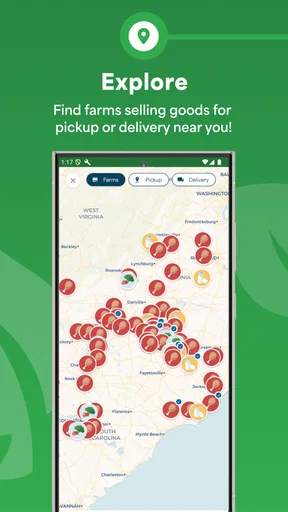
The app typically uses your location or a selected area to display nearby farms and local food businesses. You can browse available listings and review details such as business names, locations, product categories, opening information, and contact or visit details when provided. Before making a trip, it is worth checking the listing carefully, since opening hours, stock, seasonal availability, and services can change without immediate notice.
Is Locally Grown: Local Farms available in every country or region?
The usefulness of Locally Grown: Local Farms depends heavily on local coverage. In areas with many participating farms and markets, you may find a broad selection of relevant listings. In smaller towns or regions where fewer producers have joined the service, search results may be limited. It is therefore a good idea to check the app’s coverage in your location before relying on it for regular shopping.
Does the app sell food directly or process orders and payments?
Locally Grown: Local Farms is primarily intended as a discovery and information tool, so users should not automatically assume that every listing supports in-app ordering, delivery, or digital payment. Some producers may provide their own ordering links or contact options, while others may require an in-person visit. Always review each listing’s instructions and confirm prices, availability, pickup arrangements, and payment methods directly with the seller.
What should I consider before downloading and using the app?
Before downloading Locally Grown: Local Farms, consider whether it covers farms and local food providers in your area and whether you are comfortable granting location access. Location permission can make nearby searches more convenient, but you may also choose to search manually if available. Keep in mind that listings depend on information supplied by businesses, so details may occasionally be incomplete, outdated, or subject to seasonal changes.
